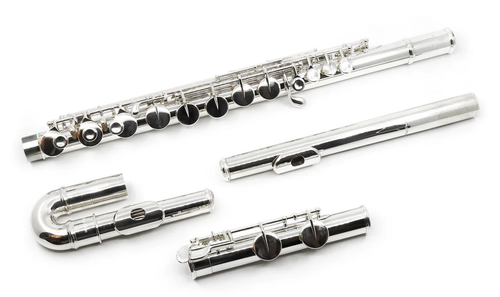


JZ C Flute, Sterling silver Head joint, Body and B Foot
Open hole keys - An open-hole flute (sometimes called a French-model flute) is an instrument featuring small circular holes cut into the centers of five primary keys (typically the A, G, F, E, and D keys). To produce a standard note, the player must press the key down and completely seal the hole using the pad of their finger.
Finger Placement: Open holes require precise, centered finger placement. This design forces the player to develop a correct and disciplined hand position.
Advanced Techniques: They allow for extended modern and avant-garde techniques, such as pitch bending, sliding (glissandi), microtonal adjustments, and alternative venting fingerings.
Plugs for Transition: Most open-hole flutes come with removable silicone or plastic plugs. Beginners or players transitioning from a closed-hole (plateau) flute can insert these plugs to cover the holes temporarily until their finger accuracy improves
French pointed arms- French pointed arms on a flute are key arms that extend from the hinge tube to a sharp point in the center of the key cup. The arm stretches across the top of the key and ends in a point right in the middle of the pad cup, unlike standard "Y-arms" that attach only to the edge.
B Foot A B foot on a flute is an extended foot joint that lowers the instrument's lowest playable note by a half-step from C down to a B
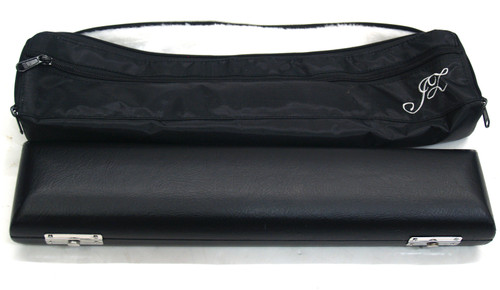
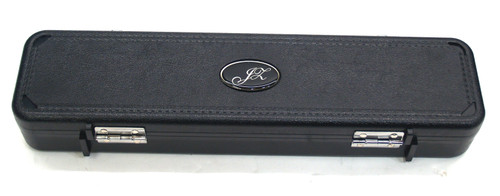
Includes case, cleaning rod & cleaning cloth